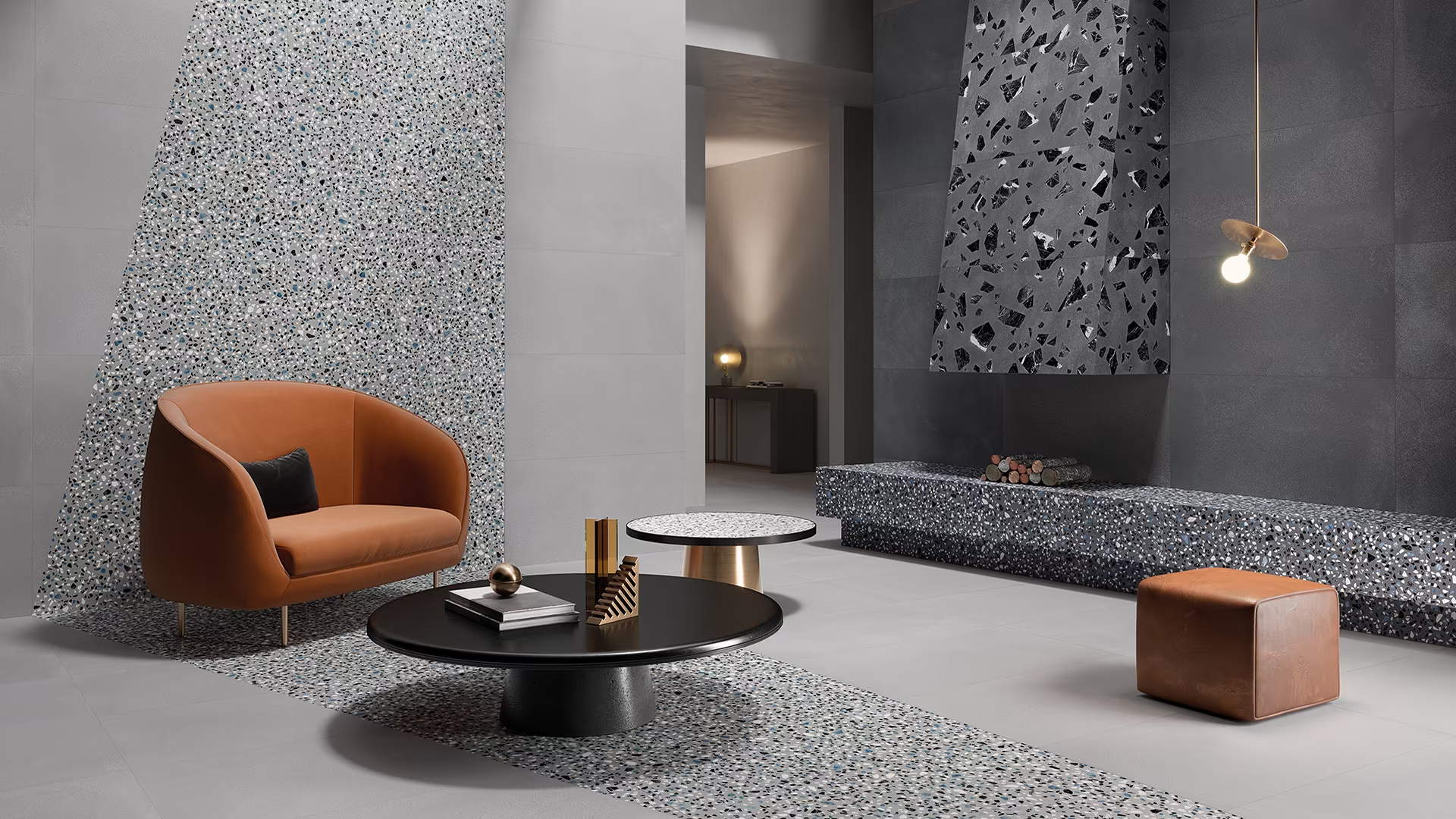
Terrazzo brings pattern into a room without relying on printed decoration. Its scattered chips create movement across floors, counters, walls, and smaller architectural details while the continuous base keeps the material feeling unified.
The best terrazzo surface ideas control that visual energy carefully. Used in the right location, terrazzo can feel playful, durable, and surprisingly timeless.
Start With the Scale of the Terrazzo Chips
Small chips create a finer, quieter pattern that can read almost like texture from across the room. Large chips have a stronger graphic effect and become a major design feature.
Scale matters most on expansive surfaces. A bold aggregate that looks exciting on a sample may become dominant when repeated across an entire floor.
Match Pattern Strength to Room Size
Smaller rooms don’t automatically require small patterns. Large chips can work beautifully in compact spaces when the surrounding finishes remain restrained.
Designers gathering surface and patio references can apply the same visual lesson across indoor and outdoor materials: scale should be judged across the full finished area, not only on a handheld sample.
Use Terrazzo Flooring as the Main Pattern
A terrazzo floor can carry enough visual interest that walls, cabinetry, and furniture need little additional decoration. This makes it useful in entries, kitchens, bathrooms, and open-plan living areas.
Warm white or beige bases feel softer, while gray bases create a more architectural look. Colored chips can connect the floor to cabinetry, artwork, or furniture without requiring exact matching.
For broader home finish inspiration, compare terrazzo with neighboring wood, metal, stone, and painted surfaces before committing to a large installation.
| Terrazzo Application | Design Character | Practical Note |
|---|---|---|
| Flooring | Continuous and graphic | Large visual area |
| Countertop | Strong focal surface | Edge detail matters |
| Backsplash | Playful accent | Easier to limit pattern |
| Shower wall | Bold and seamless-looking | Needs proper installation |
Add Terrazzo in Smaller Architectural Details
Not every project needs a complete terrazzo floor. Window sills, vanity tops, shelves, stair treads, tabletops, and fireplace surrounds can introduce the material on a smaller scale.
These controlled applications are useful when existing floors or cabinetry already have noticeable grain or pattern.
Homeowners planning relaxed interiors may find comfortable home styling ideas useful when balancing terrazzo’s harder surface with textiles, wood furniture, rugs, and softer lighting.
Coordinate Terrazzo With Simpler Materials
Terrazzo usually looks strongest beside materials that allow its pattern to remain clear. Plain painted walls, natural timber, understated tiles, and solid-color cabinetry all give the chips visual breathing space.
Metal details can change the mood considerably. Brass may highlight warm aggregates, while stainless steel or black metal creates a sharper contemporary contrast.
Repeat One Terrazzo Color Elsewhere
Rather than matching every chip, select one noticeable color from the surface and repeat it sparingly. A muted green fragment might connect with a cabinet color, while terracotta chips can relate to upholstery or artwork.
This creates cohesion without making the room look over-designed.
Where Terrazzo Can Become Too Much
The main risk is competing pattern. Terrazzo flooring combined with veined stone, patterned wallpaper, highly figured timber, and colorful textiles can leave the eye with no quiet area.
Another concern is treating every terrazzo product as equally suited to every use. Material composition, finish, sealing requirements, installation method, and maintenance can differ, so surfaces should be selected for the conditions they will actually face.
Frequently Asked Questions
Is terrazzo suitable for modern interiors?
Yes. Terrazzo works particularly well in contemporary spaces because its irregular chips contrast with simple cabinetry, clean lines, and large uninterrupted surfaces.
Can terrazzo be used only as an accent?
Yes. Small installations such as backsplashes, shelves, vanity tops, side tables, hearths, and window ledges can introduce the material without making it the dominant finish.
What colors look good with terrazzo?
That depends on the chips and base color. Wood tones, warm whites, soft gray, black, muted green, clay shades, and subdued blue often pair comfortably with common terrazzo palettes.
Let One Surface Carry the Personality
Terrazzo doesn’t need to appear everywhere to make an impact. Choose the surface that deserves the most pattern, then simplify neighboring finishes so the material can stand out naturally. Whether used across a floor or on one small architectural detail, terrazzo works best when its playful character is given enough space to be seen.