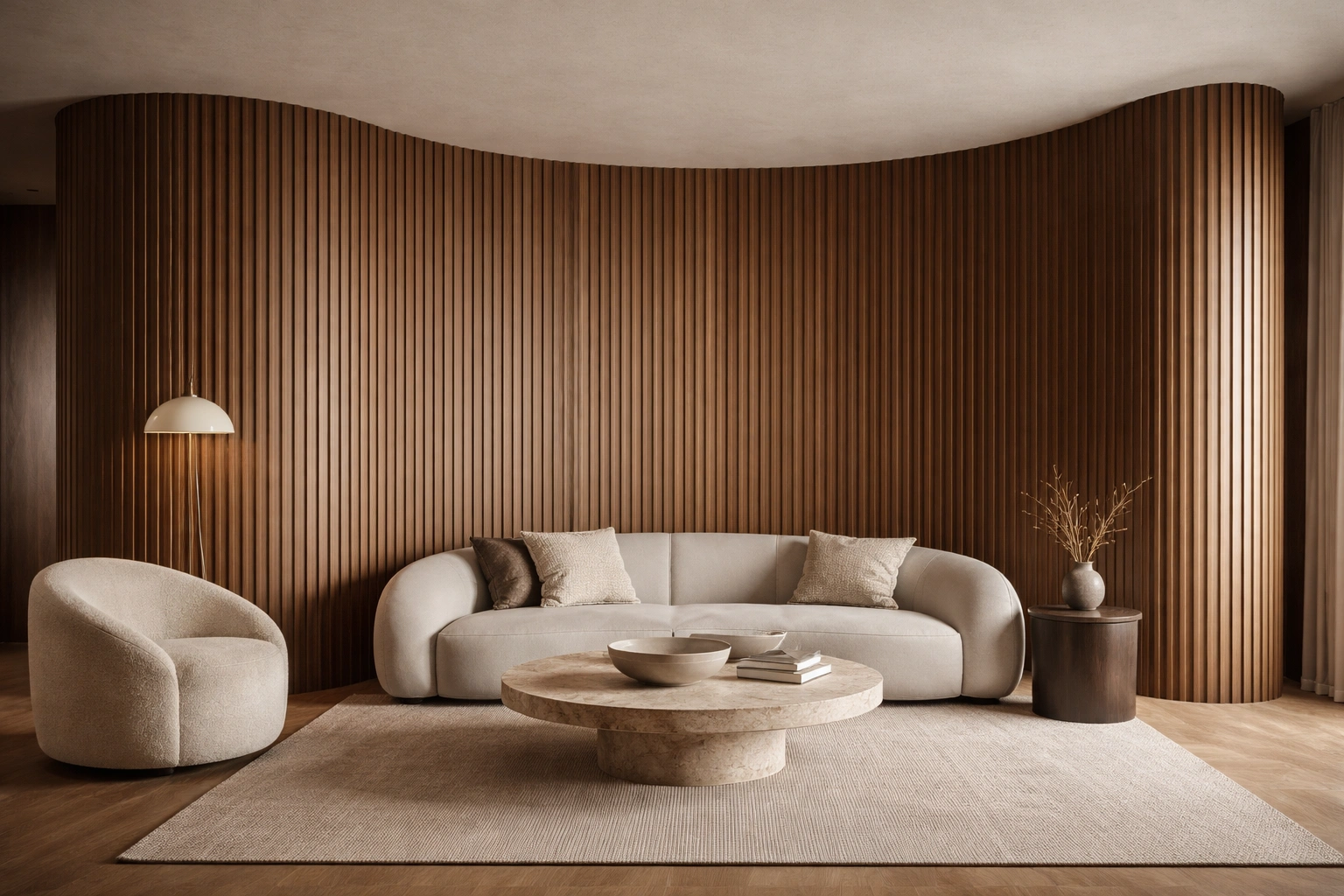
Curved walls can soften the rigid geometry created by square rooms, straight cabinetry, and sharp door openings. Even one rounded partition or corner can change how movement feels through a space.
The most practical curved wall ideas usually focus on circulation, transitions, and focal points. Curves are especially effective where a conventional corner feels awkward or interrupts an otherwise natural path.
Use Curves Where People Naturally Move
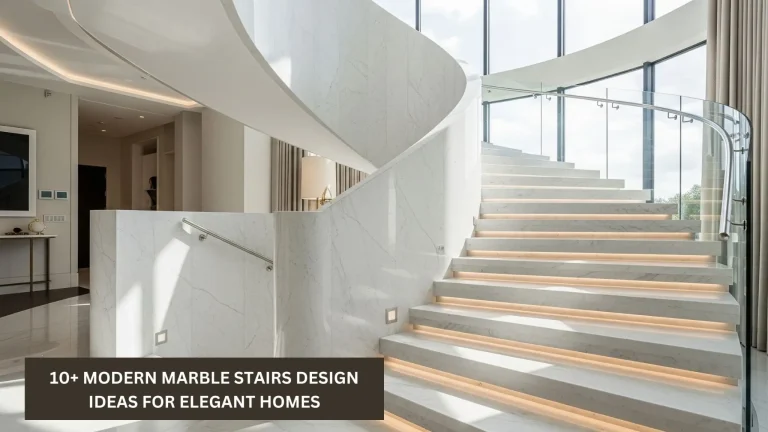
A rounded corner near a hallway, kitchen entry, or staircase can create smoother circulation because people don’t have to move around a sharp projecting edge.
Curves also make useful transitions between open-plan zones. Looking at interior architectural examples can help clarify how softer geometry works alongside straight furniture and cabinetry.
Round a Corner Instead of Rebuilding a Room
You don’t always need an entire semicircular partition. A softened corner can produce much of the visual effect while preserving usable floor area.
This approach is particularly useful in compact homes where a large curved wall might consume too much space.
Create Curved Niches and Recesses
A shallow curved niche can frame art, shelving, a small desk, or decorative lighting. Because the recess itself becomes architectural, fewer decorative objects are usually needed.
Fireplace zones can benefit from the same idea. Rounded plaster or masonry forms seen in fireplace feature designs can inspire softer focal walls without turning the whole room into a series of curves.
| Curved Feature | Main Benefit | Space Requirement |
|---|---|---|
| Rounded corner | Smoother movement | Low |
| Curved partition | Defines zones | Medium |
| Arched niche | Creates focal depth | Low |
| Sweeping feature wall | Strong statement | High |
Connect Interior Curves With Exterior Forms
Curves feel more convincing when they have some relationship to the broader architecture. Arched windows, rounded bays, circular stairs, or curved exterior walls can provide a visual reason for similar forms inside.
Examining exterior architectural forms can be useful when deciding whether a proposed interior curve belongs to the building or feels randomly applied.
Keep Furniture Mostly Simple
Curved walls do not require every nearby object to be rounded. In fact, straight sofas, simple tables, and rectangular rugs often provide necessary contrast.
One or two curved furniture pieces may reinforce the architecture, but repetition should remain controlled.
Why Too Many Curves Can Weaken the Design
Curves lose impact when they appear everywhere without a clear reason. Rounded walls, arched openings, circular furniture, curved islands, and wavy ceilings in the same room can quickly become visually restless.
Construction complexity is another consideration. Curved framing, drywall, plaster, trim, and cabinetry may require more labor than straight construction. Use curves where they solve a circulation problem or create a meaningful focal point rather than treating them as decoration alone.
Frequently Asked Questions
Are curved walls suitable for small rooms?
Yes, particularly when rounding an awkward corner improves circulation. Large sweeping partitions, however, may consume valuable floor area.
What materials work well for curved walls?
Flexible drywall systems, plaster, timber framing, specialty panels, and masonry can all be used depending on the radius and construction method.
Do curved walls suit minimalist interiors?
They can. A single smooth curve finished in the same color as surrounding walls often works well in restrained modern spaces.
Let the Curve Solve Something
A curved wall is most convincing when it improves more than appearance. Use it to guide movement, soften an awkward corner, define an open zone, or create a focal recess. When the shape has a practical reason for being there, the architecture feels natural rather than decorative.