Paint splashes, wet brushes, paper scraps, glue, clay, and unfinished projects can overwhelm an ordinary room surprisingly fast. Practical home art studio ideas start with cleanup rather than decoration. When messy materials have defined work zones and nearby storage, you can concentrate on making things instead of protecting every surface from the next spill.
Choose Surfaces That Can Handle Real Work
An art table should tolerate scratches, stains, water, and repeated wiping. A precious dining table may create more anxiety than inspiration if every paint mark feels like damage.
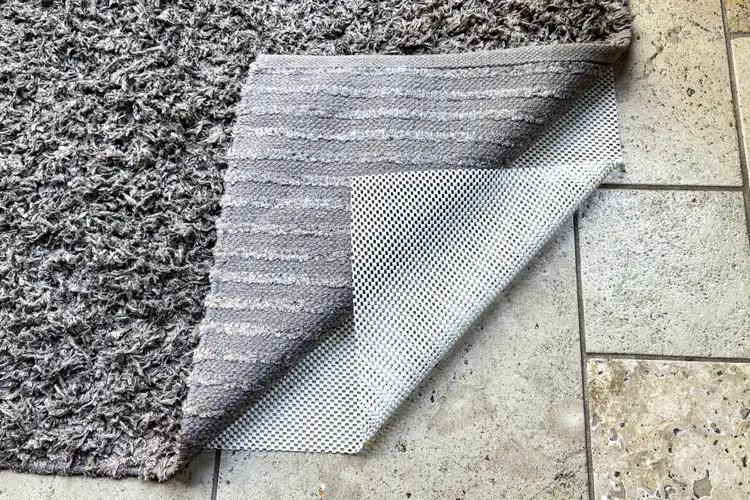
Protect vulnerable surfaces with replaceable work mats or coverings. Flooring deserves the same attention, especially in carpeted rooms where paint, charcoal dust, or clay residue can be difficult to remove.
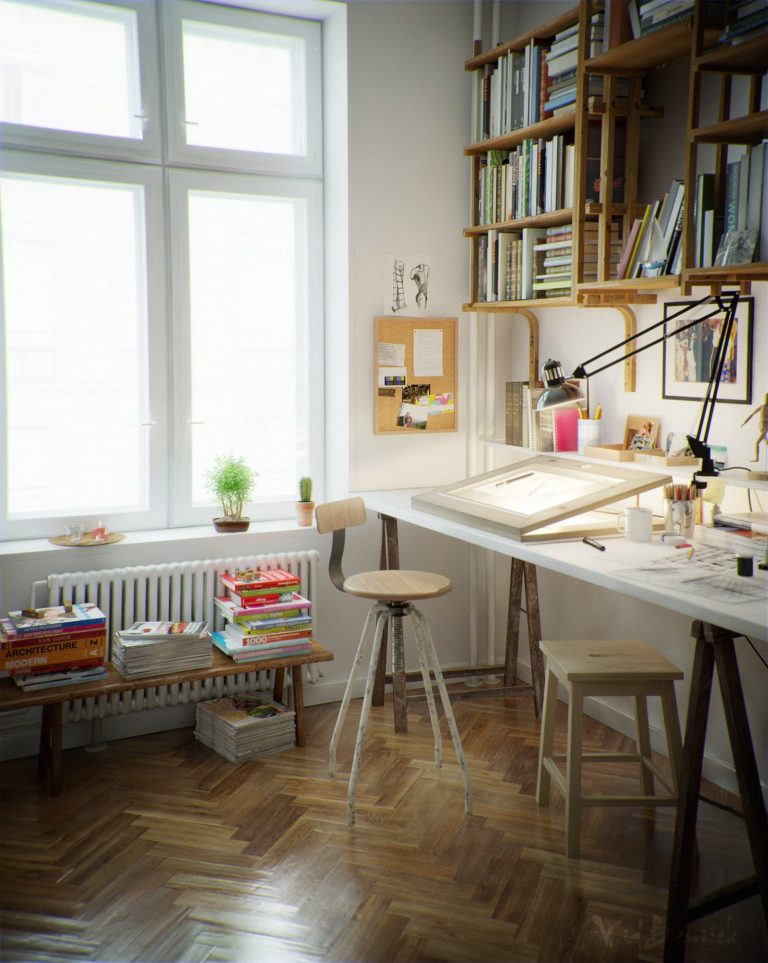
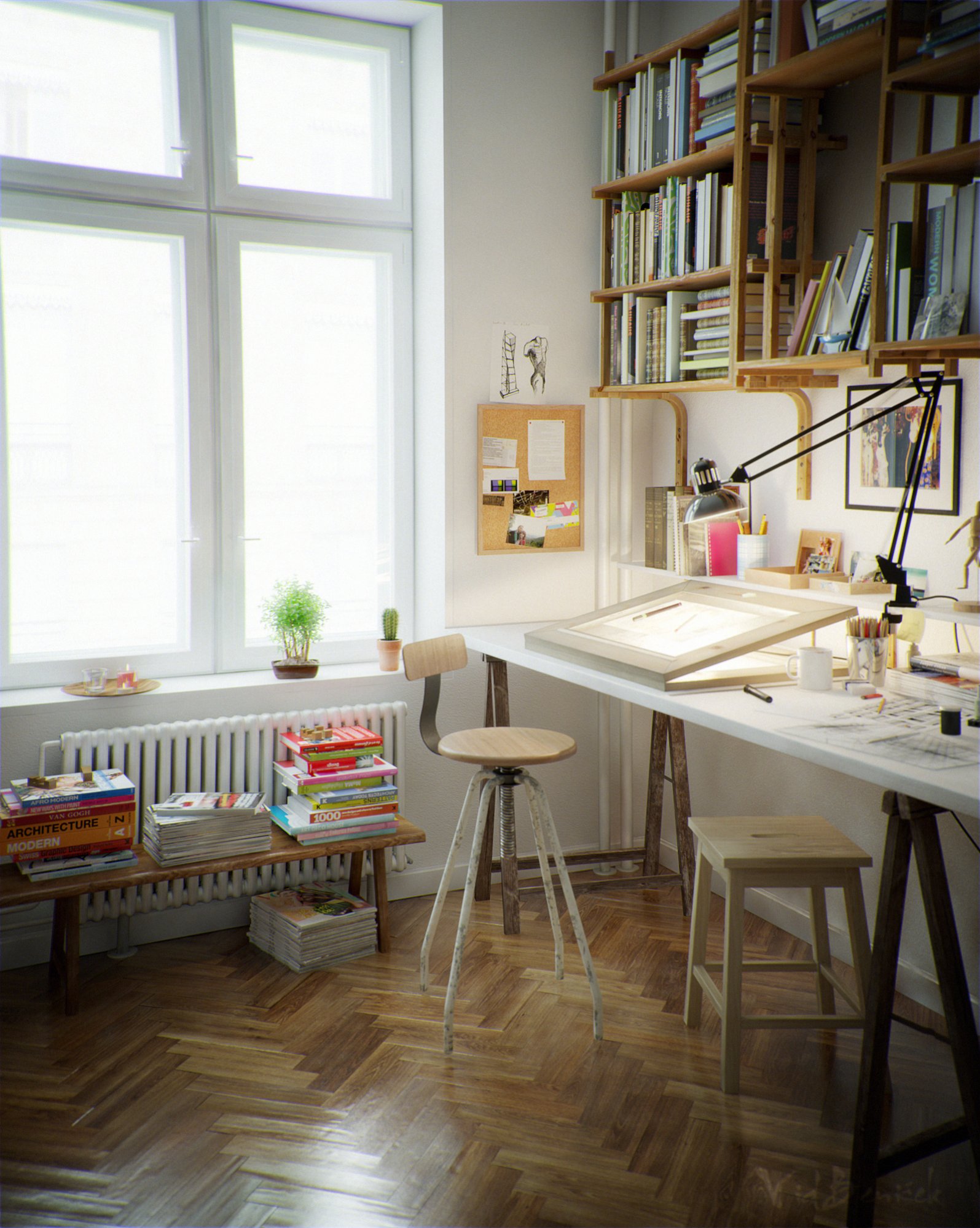
While thinking about the rest of the room, creative interior references can sit alongside practical decisions about washable surfaces, storage, and working clearance.
Separate Wet Work From Clean Work
Painting beside a laptop, sketchbook, camera, or stack of finished prints invites trouble. Even a small studio works better when wet materials stay on one side and clean tasks occupy another.
Create a Small Drying Area
A wall-mounted rack, narrow shelf system, or hanging line can keep fresh work away from the main table. Vertical drying storage is especially helpful when floor space is limited.
For the surrounding room, home decorating inspiration can be considered separately from the tougher materials required directly around the work surface.
| Studio Zone | Best Use | Cleanup Advantage |
|---|---|---|
| Main table | Drawing and painting | Central washable surface |
| Wet station | Paint and rinsing | Contains splashes |
| Drying area | Fresh artwork | Clears worktable quickly |
| Clean shelf | Paper and devices | Protects sensitive items |
Put Cleanup Supplies Within Arm’s Reach
A studio becomes harder to maintain when every spill requires walking to another floor for towels or cleaning supplies. Keep basic cleanup materials close to the messy zone.
Small bins can also separate reusable scraps from actual waste. When you review room organization ideas for the wider home, focus your studio planning on reducing the number of steps between making a mess and cleaning it.
Store Materials by Activity, Not Appearance
Grouping all matching containers together may look neat, but it can slow down creative work. A painting kit is easier to use when brushes, frequently used paints, palette tools, and related items live near one another.
The same principle works for collage, printmaking, drawing, and craft projects. Store tools according to how you reach for them during a real session rather than arranging everything solely by size or color.
Where Beautiful Studios Become Impractical
Social-media-worthy studios sometimes hide the realities of creative work. Open shelves packed with perfectly arranged supplies can collect dust, while decorative containers may be awkward to clean or difficult to open with messy hands.
Another common problem is making storage too deep. Supplies disappear behind other supplies, duplicate purchases follow, and cleanup becomes slower. Accessible shallow storage often works better than large cabinets filled from front to back.
Frequently Asked Questions
What is the best floor for a home art studio?
Hard, wipeable flooring is generally easier to maintain than carpet in a messy workspace. If replacing flooring is unrealistic, use a suitable protective layer beneath the highest-risk painting, clay, or craft areas.
How can I make an art studio in a small bedroom?
Use a compact table, wall-mounted storage, narrow shelving, and vertical drying solutions. Keep only frequently used materials in the immediate workspace and store occasional supplies elsewhere.
Should art supplies be stored in open or closed cabinets?
Both can work. Frequently used tools benefit from easy access, while dusty, delicate, or visually cluttered materials may be better behind doors or inside labeled containers.
Design for the Mess You Actually Make
The strongest studio setup is not the one that stays spotless. It is the one that can become messy during a productive session and return to order without an exhausting cleanup. Build around washable surfaces, short cleanup routes, sensible zones, and storage arranged according to your real creative habits.