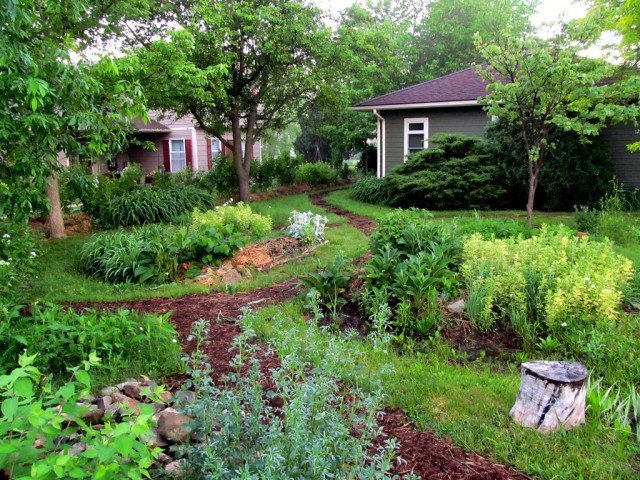
A swale is a broad, shallow depression that redirects or slows rainwater without looking like a conventional ditch. Properly shaped, it can guide runoff across a residential property while remaining mowable, plantable, or nearly invisible within the surrounding grade.
The most useful swale design ideas begin with gentle elevation changes rather than deep excavation.
Follow the Contours of the Property
Water responds to grade, so successful swales are planned around existing high and low points. Determine where runoff enters, where it causes trouble, and where it can safely move.
A gradual curve often looks more natural in a landscaped yard than a straight trench. It can also spread flow over a wider area.
Make the Depression Broad Rather Than Steep
Residential swales typically work best when their sides transition gently into surrounding ground. Abrupt banks can erode, become difficult to mow, and create an obvious ditch-like appearance.
The bottom should remain consistently lower than its edges so water doesn’t escape midway along the route.
Connect the Swale With Outdoor Features
A swale can run along the edge of lawn, behind a planting bed, beside a driveway, or between different outdoor zones. The key is avoiding raised edging or structures that block its intended flow.
People considering poolside landscape planning or other outdoor projects should remember that new hard surfaces may send additional water toward existing low areas.
Plan major grading and hardscape changes together whenever possible.
| Swale Feature | Design Choice | Reason |
|---|---|---|
| Side slopes | Gentle | Easier maintenance |
| Alignment | Curved with grade | Natural flow |
| Surface | Grass or plants | Soil protection |
| Outlet | Stable low area | Controlled discharge |
Use Vegetation to Hold the Soil
Grass is a practical surface for swales that cross open lawn because roots help resist erosion. Planted swales can instead use moisture-tolerant grasses, sedges, and other vegetation suited to periodically wet soil.
A yard developed around natural landscape character can integrate a swale surprisingly well because the depression can read as intentional terrain instead of infrastructure.
Avoid loose mulch in fast-flowing sections because stormwater may carry it downstream.
Think About the Entire Property Grade
Changes that seem small can redirect significant runoff. Raised garden beds, patios, driveway extensions, and retaining walls may all alter existing drainage paths.
Reviewing home landscape upgrades in the context of the whole property helps keep a swale coordinated with present and future improvements.
Where large quantities of water, steep slopes, retaining structures, or foundation concerns are involved, professional grading advice may be worthwhile.
Why Deeper Isn’t Automatically Better
Making a swale deeper can seem like the easiest way to increase capacity, but steep sides often create maintenance and erosion problems. A broader route may manage flow more naturally.
Another mistake is creating low sections within the swale itself. Those pockets hold water instead of moving it. Poorly placed landscape edging can have the same effect, acting like a miniature dam across the channel.
Consistency matters more than dramatic depth.
Frequently Asked Questions
Is a swale supposed to hold water?
Some swales mainly convey water, while others are designed to slow runoff and encourage infiltration. Persistent standing water may indicate poor grading, compacted soil, or an outlet that isn’t functioning as intended.
Can you mow over a drainage swale?
Yes, many residential grass swales are designed with gentle slopes specifically so they can remain part of a normal lawn. Steep sides make routine mowing harder and may increase erosion.
What is the difference between a swale and a ditch?
A swale is generally broader and shallower, with gradual sides that blend into the landscape. A conventional ditch tends to have a more obvious channel and may carry water more directly.
Shape the Grade Before Adding Details
A useful swale is subtle engineering. The slope, width, route, and outlet should work before plants or decorative elements are added. Once the grade is correct, vegetation can stabilize the soil and help the feature disappear into the landscape. The goal isn’t to create a noticeable channel; it’s to give rainwater an easier route than the one causing trouble.