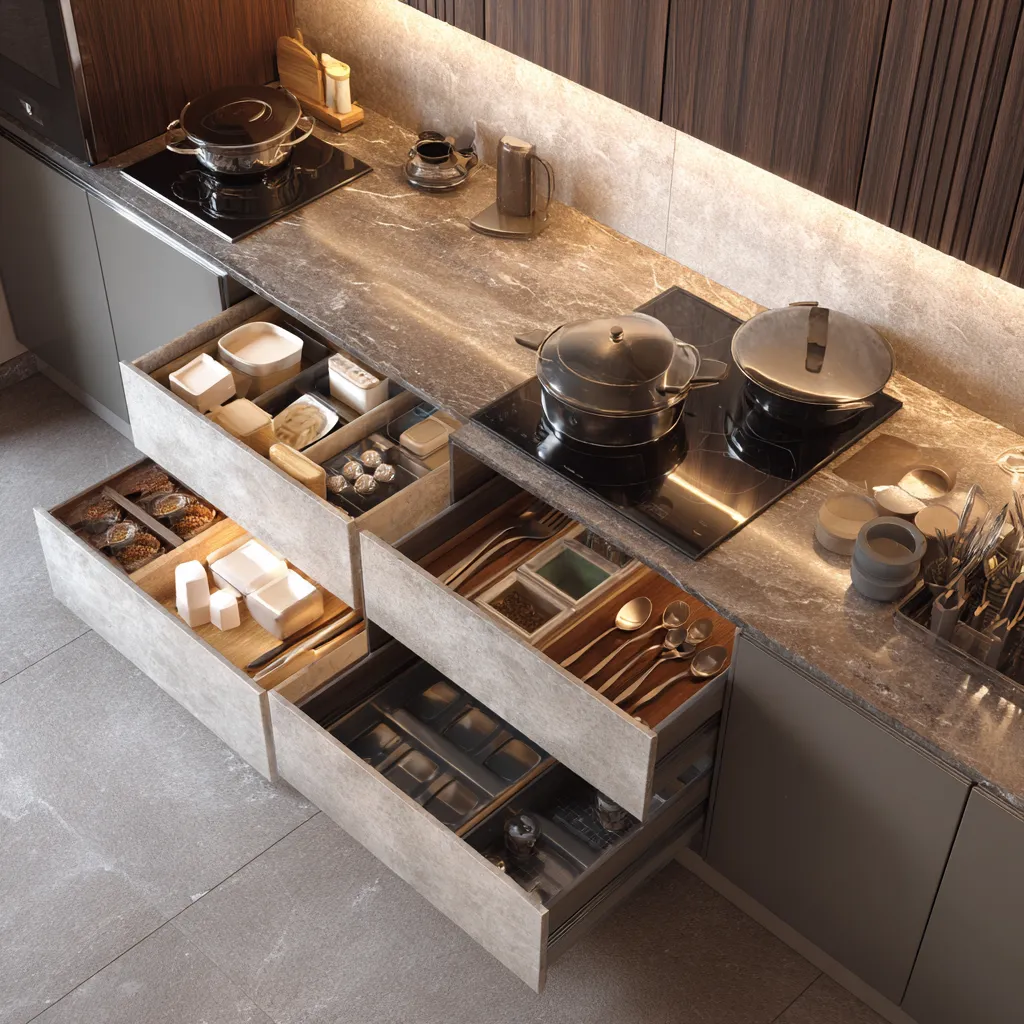
Deep kitchen drawers can hold an impressive amount, but depth alone doesn’t guarantee useful storage. Pots can become nested puzzles, dish stacks may shift, and large appliances can bury smaller pieces. Good deep drawer ideas use zones, supports, and sensible stacking so bulky kitchen items remain visible instead of disappearing beneath one another.
Match the Drawer to the Weight
Heavy cookware belongs in strong, smoothly operating drawers with hardware designed for the expected load. Pots, cast cookware, casserole dishes, and stacks of plates become surprisingly heavy when combined.
Place the heaviest pieces lower in the kitchen whenever possible. Low storage reduces lifting height and makes bulky cookware easier to control.
Leave Room Around Handles
Pan handles and lid knobs often consume more room than expected. Position cookware so handles don’t catch neighboring pieces or prevent the drawer from closing.
Testing the arrangement before adding permanent organizers can prevent several frustrating adjustments later.
Create Zones Instead of One Large Pile
Dividers, pegs, or low partitions can separate pots from bowls and serving dishes. Looking through kitchen layout references may provide arrangement ideas, but your largest cookware should establish the boundaries.
A dedicated zone helps prevent one category from slowly spreading across the entire drawer. It also makes empty spaces obvious when something hasn’t been returned.
Use Peg Systems for Dish Stacks
Adjustable pegs are especially helpful for plates and bowls because they keep stacks from sliding when a drawer opens. They can also be repositioned when your dish collection changes.
Broader everyday kitchen inspiration may show many decorative approaches, but simple supports often provide more value than complicated inserts.
| Drawer Contents | Storage Method | Main Benefit |
|---|---|---|
| Pots | Nested with separation | Saves horizontal space |
| Plates | Adjustable pegs | Reduces sliding |
| Mixing bowls | Graduated nesting | Keeps sizes together |
| Small appliances | Open zones | Improves visibility |
Keep everyday dishes near the front or center where they can be lifted without reaching around taller objects.
Give Bulky Items Breathing Room
Deep drawers are useful for colanders, mixing bowls, food containers, and compact appliances that don’t fit comfortably in standard drawers. The temptation is to fill every remaining inch.
General storage planning examples can spark ideas for grouping these awkward items, but leaving some open space often improves usability. Crowded drawers require more rearranging and can make handles or lids jam against the cabinet frame.
A single appliance with an awkward cord may deserve its own section rather than being squeezed between cookware.
Where Deep Drawer Storage Often Fails
The biggest mistake is treating depth as permission to stack endlessly. Once several layers develop, the drawer begins behaving like a cabinet with no shelves: useful items vanish underneath other useful items.
Overloading is another concern. Drawer hardware has limits, and heavy cookware adds up quickly. Keep weight distributed rather than concentrating everything on one side. If a drawer feels strained, sticks, or sags, reduce the load and check the hardware before continuing to use it heavily.
Frequently Asked Questions
Is it better to store pots in drawers or cabinets?
Deep drawers often provide easier access because the entire storage area comes toward you. Cabinets may work better for extremely tall stockpots or cookware that exceeds the drawer’s usable height.
How can plates be kept from sliding in deep drawers?
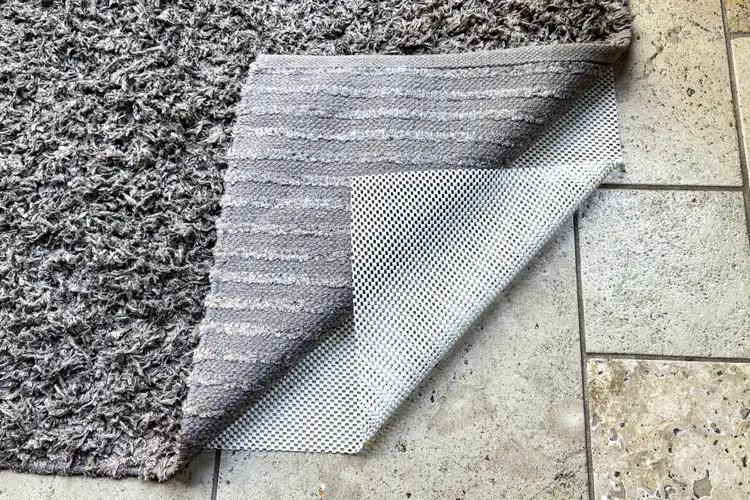
Adjustable peg systems, non-slip drawer liners, or fitted separators can reduce movement. The aim is to support each stack without making dishes difficult to lift.
Should lids be stored with pots in the same drawer?
They can be if space allows. Some kitchens work better with lids stored vertically in a separate section so they don’t create unstable stacks or consume the center of the drawer.
Let Accessibility Decide the Layout
A deep drawer succeeds when the item you need can be reached without unpacking several others first. Use strong zones, moderate stacking, and adjustable supports rather than filling every gap. A little unused space can make the entire drawer work better, especially once heavy cookware and everyday dishes begin moving through it several times a day.